Most homeowners assume their home is relatively clean and healthy. After all, if you cannot see a problem, it is easy to believe one does not exist. But the data tells a very different story. Research conducted by the National Institutes of Health and the Environmental Protection Agency has revealed that indoor allergens are far more widespread than most people realize, affecting the vast majority of American homes and contributing to billions of dollars in healthcare costs every year.
The Numbers Are Staggering
Here are some of the most important statistics about indoor allergens that every homeowner should know:
- Over 90% of U.S. homes contain three or more detectable allergens. A landmark study by the National Institute of Environmental Health Sciences found that the overwhelming majority of American homes have measurable levels of multiple allergen types, including dust mites, pet dander, cockroach proteins, and mold. Most homeowners are unaware of this contamination because these allergens are microscopic and invisible to the naked eye.
- More than 50 million Americans suffer from allergies each year. According to the Asthma and Allergy Foundation of America, allergies are the sixth leading cause of chronic illness in the United States. The annual cost of allergies exceeds $18 billion in direct medical expenses, lost productivity, and medication costs.
- 99% of homes have detectable levels of mold antigens. Research published in the Journal of Allergy and Clinical Immunology found that mold proteins are present in virtually every home tested across the country. While low levels may not cause symptoms in healthy individuals, even moderate mold exposure can trigger reactions in sensitized people and those with respiratory conditions.
- Dust mites are found in approximately 84% of U.S. homes. The National Survey of Lead and Allergens in Housing detected dust mite allergens in the vast majority of tested residences. Concentrations were highest in bedding, upholstered furniture, and carpeted areas.
- Approximately 63% of homes contain detectable levels of cockroach allergens. This figure rises dramatically in urban areas and in regions with warm, humid climates. Cockroach allergens are one of the strongest predictors of childhood asthma severity.
- Pet allergens are found in nearly 100% of U.S. homes, including those without pets. Cat and dog allergens are so pervasive that they are transported on clothing and are present in schools, offices, and even homes that have never housed an animal. Studies show detectable levels of cat allergen in every home sampled, regardless of pet ownership.
The Economic Impact
Indoor allergens do not just affect health. They carry a significant economic burden for families and the healthcare system:
- $3.4 billion is spent annually on allergy-related doctor visits in the United States
- $7 billion is spent each year on allergy medications, both prescription and over-the-counter
- 3.5 million workdays and school days are lost each year due to allergy symptoms
- $56 billion is the estimated annual cost of asthma in the U.S., with indoor allergens being the primary trigger for most asthma episodes
For individual families, the costs add up quickly. Frequent doctor visits, prescription medications, lost work time, and reduced quality of life create an ongoing financial drain that often goes unrecognized because the symptoms are attributed to colds, sinus problems, or seasonal changes rather than the home environment.
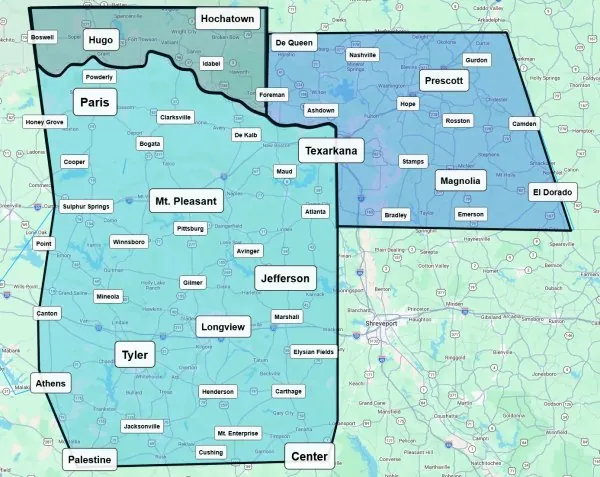
Regional Factors: Why East Texas Homes Face Higher Risk
Geography and climate play a significant role in indoor allergen levels, and East Texas presents several factors that elevate risk above the national average:
- High humidity: The Texarkana, Longview, and Tyler region experiences average relative humidity levels between 65% and 85% throughout much of the year. Dust mites thrive above 50% humidity, and mold growth accelerates above 60%. This means East Texas homes are in the allergen danger zone for most of the year without active humidity management.
- Warm temperatures: The extended warm season in East Texas provides ideal breeding conditions for dust mites and cockroaches year-round, unlike northern climates where cold winters naturally reduce these populations.
- Dense vegetation: The forested landscape of East Texas means higher outdoor mold spore counts that infiltrate homes through open doors, windows, and HVAC intake systems.
- Older housing stock: Many homes in the region were built before modern building codes addressed moisture management and ventilation, making them more susceptible to moisture intrusion and poor indoor air quality.
- Air conditioning dependence: The heavy reliance on air conditioning means homes are sealed tightly for months at a time, trapping allergens inside and recirculating them through HVAC systems that may not have adequate filtration.
Why These Numbers Matter for Homeowners
Statistics are only useful if they lead to action. Here is what these numbers mean in practical terms for your family:
You are almost certainly exposed. Given that over 90% of homes contain multiple allergens, the question is not whether allergens are in your home but which ones and at what levels. Even new, clean homes can harbor significant allergen loads that are invisible without laboratory testing.
Symptoms may be misattributed. Many families live with chronic congestion, headaches, fatigue, and skin irritation without connecting these symptoms to their home environment. When symptoms are present year-round rather than following seasonal patterns, indoor allergens deserve investigation.
Small changes can yield big results. Research shows that targeted allergen reduction measures, such as mattress encasements, HEPA filtration, and humidity control, can reduce allergen levels by 50% to 90% in treated areas. You do not need to solve the problem all at once, but you do need to know where the problem is before you can address it effectively.
The Case for Professional Testing
The statistics make a compelling case for understanding what is inside your home. Professional allergen testing is the only way to get a clear, quantified picture of your indoor allergen environment. Home test kits and visual inspections cannot measure the full range of biological allergens at the precise levels that matter for health decisions.
A professional assessment provides laboratory-quantified results compared against established health benchmarks, room-by-room data showing where concentrations are highest, and specific, actionable recommendations based on your unique situation. This information transforms the abstract statistics into a concrete action plan tailored to your home and your family's health needs.
How Awareness Leads to Action
Knowledge is the catalyst for change. Families who understand the specific allergens in their home take more effective action, spend their improvement budgets more wisely, and see better health outcomes than those who rely on generic advice or trial and error. The investment in professional testing typically pays for itself many times over through reduced medication costs, fewer doctor visits, and improved quality of life.
Do not assume your home is the exception to the statistics. With over 90% of homes affected, the odds are strongly in favor of testing. And the sooner you know what you are dealing with, the sooner you can start making your home the healthy, comfortable sanctuary it should be.